FDA-approved drug
Azelaic acid earned its evidence at prescription strength, and the serum aisle is borrowing it
Prescription azelaic acid is one of the best-proven topicals in dermatology: 664-subject and 1362-subject pivotal programs, a head-to-head win over metronidazole, Cochrane-rated high-quality evidence, and a 329-woman trial that matched hydroquinone 4% for melasma. All of it used 15% or 20%. Of the 17 interventional human studies in our table, exactly one tested the 10% strength cosmetics actually sell: 23 people, 8 weeks, a combination product, measuring texture and redness. Every row below states its strength, species and result.
- 29studies and reviews in our graded evidence table
- 24of them human evidence, species-labeled row by row
- 16of the 17 interventional human studies used prescription strengths (15% or 20%); exactly 1 tested the 10% cosmetic strength
- 52fetch-verified citations, 100.0% peer-reviewed or government sources

Online care, from intake to delivery
Azelaic acid care, made simple
Choose your plan, complete a private medical intake, and connect with a licensed provider. If prescribed, treatment ships discreetly to your door.
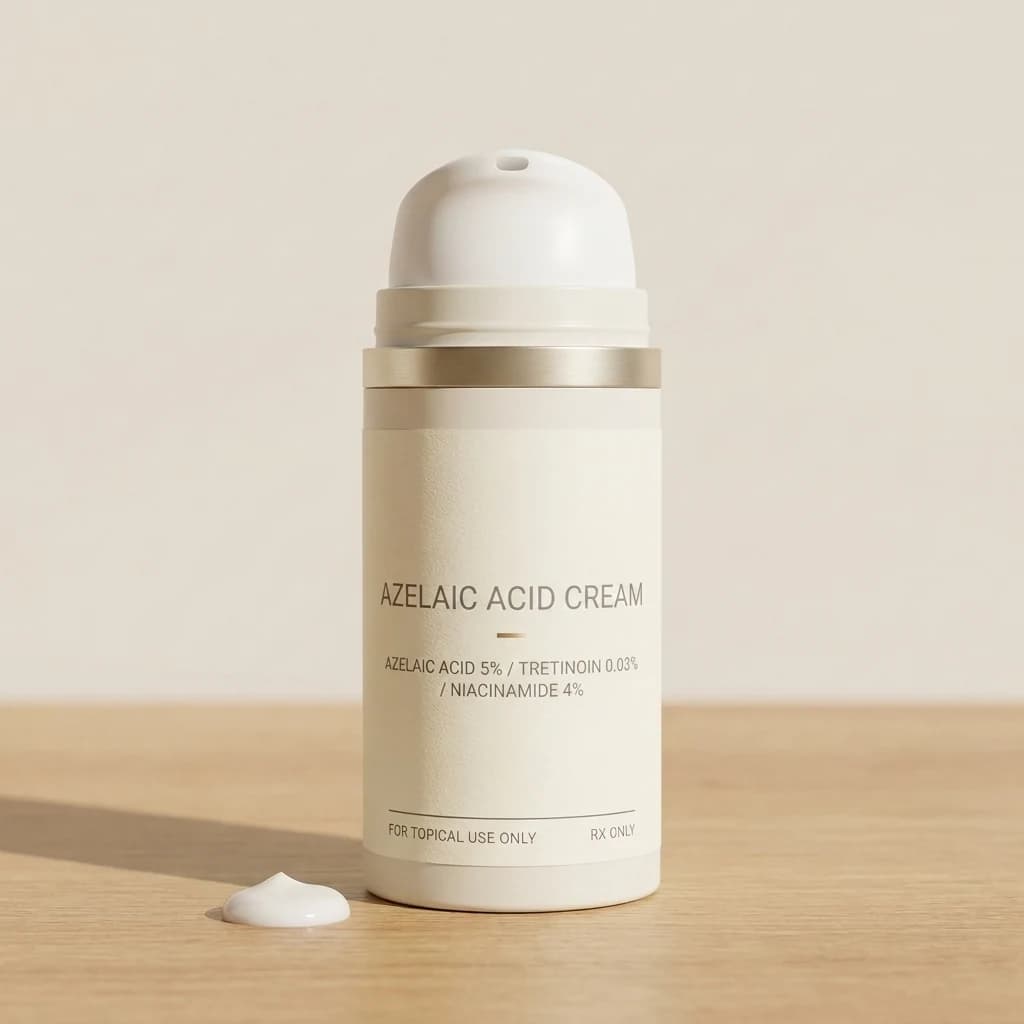
Your care plan includes
Everything you need to get started
Encrypted checkout • provider review required • shipping included
- 01Choose your planSelect the supply and refill preference that works for you.
- 02Complete your intakeShare your health history in our private, secure flow.
- 03Provider reviewIf appropriate, your prescription is prepared and shipped.
Prescription treatment requires an online medical evaluation. A provider will determine whether treatment is medically appropriate; approval is not guaranteed.
Key facts
- StatusFDA-approved drug
- Skin penetration3 to 5% into stratum corneum; up to 10% in epidermis and dermis
- Half-life, topicalAbout 12 hours (absorption rate-limited)
- Half-life, oralAbout 45 minutes
- Endogenous plasma range20 to 80 ng/mL, diet-dependent
- Plasma on 15% gel BID42 to 63.1 ng/mL, inside the vehicle-arm range
- Foam steady stateBy day 5; day 7 Cmax 51.8 +/- 18.5 ng/mL
- Follicular deliveryReaches in vitro antimicrobial concentrations in follicular casts
- EliminationMainly unchanged in urine
- ClassSaturated C9 dicarboxylic acid (nonanedioic acid)
- Molecular weight188.22 Da (C9H16O4), CAS 123-99-9
- Systemic absorptionAbout 4% of a topical dose
- Topical half-lifeAbout 12 hours (45 minutes oral)
- Normal plasma level20 to 80 ng/mL from diet and endogenous synthesis
- Most common side effectBurning, stinging or tingling: 29% with 15% gel
- Rosacea evidence gradeHigh certainty (Cochrane 2015; GRADE 2019)
- Study rows on this site29 (24 human, 5 in vitro)
- Verified citations52 (100% peer-reviewed or government)
Browse by topic
Everything on Azelaic acid, organized the way you research it.
Free Azelaic acid tools
Practical calculators and references, each scoped and sourced.
study rows by species, from the evidence table
All guides
59 in-depth, individually cited guides.
Review-gated archive: the guides below are preserved for individual medical and source review. They are currently excluded from search indexing and AI citation files.
Evidence 18 guides
Safety 16 guides
Comparisons 9 guides
Dosing 9 guides
Sourcing 7 guides

We will tell you when the evidence moves
One short email when something real happens: a new randomized trial at any strength, a label change, an FDA action, or the first honest 10% serum trial. Care options are presented separately from this email brief.