Last updated 2026-07-27
TL;DR
Prescription azelaic acid comes as 20% cream (Azelex) or 15% gel/foam (Finacea), applied once or twice daily. Over-the-counter versions top out around 10%. Higher strength generally means faster, more reliable results for acne, rosacea, and melasma, but tingling is common the first few weeks at any concentration.
what is the standard azelaic acid dosage for acne and rosacea
For acne, the FDA-approved dosage is Azelex (azelaic acid cream, 20%), applied twice daily, morning and evening, to clean skin [1]. The original clinical trials that got Azelex approved used this exact regimen: a pea-sized amount rubbed gently into affected areas for up to several months. For rosacea, the approved product is Finacea, available as a 15% gel or a 15% foam, applied twice daily as well [2]. Finacea's own prescribing information lists application in the morning and evening, with visible improvement in papules and pustules typically assessed around week 12 in trials [2]. Neither drug is dosed by body weight or blood level, since azelaic acid works locally on the skin rather than systemically. That means "dosage" here really means concentration, frequency, and how much product you use per application, not a milligram-per-kilogram calculation like you'd see with an oral medication. Most dermatologists start patients twice daily if tolerance allows, then drop to once daily if stinging is a problem. There's no strong trial data showing once-daily dosing is inferior for maintenance, it's just less studied head-to-head.
what's the difference between Azelex 20% and Finacea 15%
Azelex is a 20% cream approved specifically for acne vulgaris. Finacea is a 15% gel or foam approved specifically for rosacea (inflammatory papules and pustules) [1][2]. The concentration difference isn't arbitrary: rosacea skin tends to be more reactive and barrier-compromised, so the lower 15% strength balances efficacy against tolerability. Vehicle matters too. Azelex's cream base is thicker and more occlusive, which suits acne-prone skin that can handle it. Finacea's gel and foam formulations spread thin and dry faster, which rosacea patients generally tolerate better than a heavy cream. Off-label use happens in both directions. Some clinicians prescribe Finacea for acne or melasma, and some use Azelex off-label for rosacea, but the FDA approval language is specific to each indication and strength [1][2]. If your prescriber deviates from the label, ask why. Usually it's a reasonable tolerability call, not a mistake.
| Product | Strength | Form | FDA-approved for |
|---|---|---|---|
| Azelex | 20% | Cream | Acne vulgaris [1] |
| Finacea | 15% | Gel or foam | Rosacea (papulopustular) [2] |
| OTC azelaic acid | Typically 10% (up to ~15-20% in some cosmetic lines) | Serum, cream, gel | Not FDA-approved as a drug; sold as cosmetic |
how does the 10% over-the-counter version compare to prescription strength
Over-the-counter azelaic acid products, sold as cosmetics rather than drugs, usually sit around 10%, though some brands market up to 15% or 20% blends without FDA drug approval. The key legal distinction: Azelex and Finacea went through FDA new drug applications with controlled trials proving efficacy at specific concentrations [1][2]. OTC azelaic acid has not. That doesn't mean 10% does nothing. Azelaic acid's mechanism (it inhibits tyrosinase, has antimicrobial activity against Cutibacterium acnes, and calms inflammatory pathways) works on a dose-response curve, so lower concentrations still help, just more slowly and modestly [3]. A dermatologist might reasonably suggest OTC 10% for mild, cosmetic-level concerns like uneven tone, and reserve prescription strength for diagnosed acne or rosacea that needs a real clinical response. Cost is a real factor in this decision too. Generic azelaic acid 15% gel can run anywhere from roughly $30 to $90 for a 30-gram tube out of pocket depending on pharmacy and insurance, while OTC 10% serums often cost $15 to $40 for a comparable volume. If your skin is only mildly affected, OTC may genuinely be enough. If you have moderate inflammatory acne or persistent rosacea redness, the jump to prescription strength is usually worth it. One honest caveat: there isn't a large published head-to-head trial comparing 10% OTC azelaic acid against 15% or 20% prescription formulas in the same patients. Most of the efficacy data comes from trials of the approved drug products themselves, not from the OTC category as a whole.
how much azelaic acid should I apply and how often
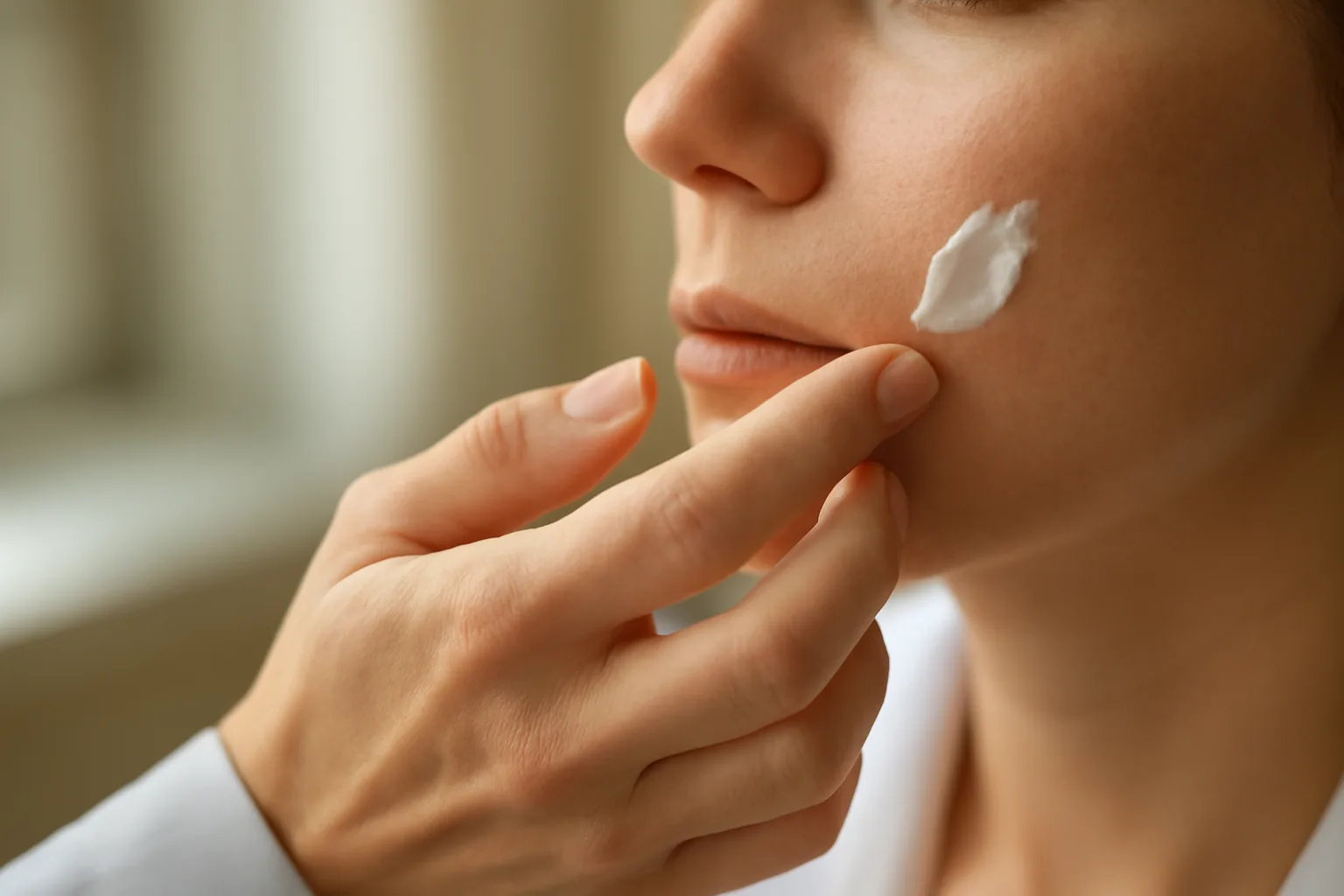
Use a pea-sized to half-teaspoon amount, roughly, depending on the area treated, once or twice daily. Rub it in gently until it disappears. More product does not mean faster results. It mostly means more stinging and more product wasted. For facial acne, that's typically enough to cover the entire face, more than active spots, since azelaic acid also has some preventive effect on new lesion formation. For rosacea, apply a thin layer across the affected central face (cheeks, nose, chin, forehead), avoiding eyes, lips, and open wounds. Most prescribing information recommends starting once daily for the first one to two weeks if the patient has sensitive skin, then advancing to twice daily as tolerated. This isn't universal across every label, so follow what your prescriber or the specific package insert says rather than a generic rule. Apply to clean, dry skin. Wait for skin to fully dry after washing, since damp skin absorbs more medication and increases stinging.
how long does azelaic acid take to work
Expect visible improvement in acne or rosacea redness somewhere between 4 and 12 weeks of consistent twice-daily use, based on the timeframes used in the pivotal Azelex and Finacea trials [1][2]. Full results for hyperpigmentation and melasma often take longer, commonly 3 to 6 months. One of the more cited melasma studies, a 1995 study comparing azelaic acid 20% cream to hydroquinone 2%, found azelaic acid produced good to excellent improvement in a majority of patients over roughly 6 months, performing comparably to hydroquinone with fewer irritation issues in some comparisons [4]. That's a meaningfully long commitment window; people who quit at 3 weeks because they don't see a dramatic change are quitting before the drug has had a fair chance. Don't expect overnight results. Azelaic acid is not a spot treatment in the way benzoyl peroxide can feel like one. It works gradually on new cell turnover, pigment production, and background inflammation, so the timeline is measured in months, not days.
does azelaic acid work for melasma and hyperpigmentation, and at what strength
Yes, and the evidence here is genuinely solid, more than anecdotal. Azelaic acid 20% cream has been studied specifically for melasma and post-inflammatory hyperpigmentation, with multiple trials showing meaningful pigment reduction over 3 to 6 months [4][5]. It works by inhibiting tyrosinase, an enzyme overactive melanocytes rely on to produce excess pigment, and it seems to preferentially target abnormally hyperactive melanocytes rather than normal skin, which may explain why it rarely causes the blotchy hypopigmentation sometimes seen with hydroquinone [3]. A commonly cited comparative trial found azelaic acid 20% cream performed similarly to hydroquinone 4% for melasma, with a lower rate of significant irritation in some patient groups [5]. That's a notable finding for anyone who has tried hydroquinone and reacted badly to it. For melasma specifically, dermatologists most often reach for the 20% strength (Azelex, off-label for this indication, since it's FDA-approved for acne, not melasma) rather than the 15% rosacea formulation. Off-label prescribing for melasma is common practice, well-documented in dermatology literature, and not a red flag, but it does mean insurance coverage can be inconsistent since the FDA-approved indication doesn't match the use.
is azelaic acid safe during pregnancy
Azelaic acid is one of the more reassuring topical options during pregnancy, which is a big part of why dermatologists reach for it so often in pregnant or breastfeeding patients with acne or melasma. It's categorized as low systemic absorption with no established teratogenic signal in available human data, and many OB and dermatology sources list it among preferred topical acne treatments in pregnancy, in contrast to retinoids and high-dose salicylic acid, which are generally avoided [6]. That said, "safer" isn't the same as "zero data." Talk to your prescriber or OB before starting any topical during pregnancy, azelaic acid included. Dosage doesn't change for pregnancy; it's still the standard 15% or 20% applied once or twice daily, but your prescriber may want closer monitoring or a lower starting frequency.
what side effects come with prescription-strength azelaic acid
The most common side effect, by far, is transient stinging, burning, or tingling right after application, especially in the first two to four weeks. Finacea's prescribing information lists burning, stinging, and tingling as the most frequently reported adverse reactions in trials, occurring in a meaningful minority of patients, alongside pruritus (itching) and dryness [2]. Azelex's label similarly lists burning, pruritus, and stinging/tingling among the most common reactions [1]. This usually fades as skin adjusts. If it doesn't fade after 3 to 4 weeks, or if it's severe from day one, that's worth a call to your prescriber, more than pushing through. Rarer reactions include mild scaling, redness, or dryness. True allergic contact dermatitis is uncommon but possible. Azelaic acid does not increase photosensitivity the way retinoids or certain acids do, so it doesn't carry the same sun-avoidance warnings, though daily sunscreen is still smart for anyone treating pigmentation. For a full rundown of what azelaic acid interacts with, including other topicals people often stack it with, see Azelaic Rx drug interactions.
can you use azelaic acid every day, or should you cycle it
Yes, daily use, once or twice a day, is exactly how it was studied and how it's meant to be used long-term. Unlike retinoids, azelaic acid doesn't require a break-in cycling schedule for most people. There's no strong evidence that periodic breaks improve outcomes or reduce side effects. Some people do choose to start with once-daily application for the first week or two simply to gauge tolerance, then move to twice daily. That's a tolerability strategy, not a formal cycling protocol. Long-term daily use over months, even years, appears well tolerated based on the extended trial periods (up to 12 months in some rosacea studies) with no signal of increasing irritation or tachyphylaxis over time [2].
how does azelaic acid compare to other acne and rosacea treatments
Azelaic acid sits in an interesting middle position: less potent than tretinoin for pure comedonal acne, but with a broader mechanism (antibacterial, anti-inflammatory, and anti-pigment all at once) that makes it useful across acne, rosacea, and pigmentation simultaneously. Few other single topical agents cover all three. Compared to benzoyl peroxide, azelaic acid doesn't bleach fabric and doesn't carry the same bacterial resistance concerns, but it also works more slowly on active inflammatory lesions. Compared to metronidazole (a common rosacea alternative), some trials suggest azelaic acid 15% gel produces comparable or slightly better reduction in inflammatory rosacea lesions, though results vary by study and metronidazole remains a reasonable first-line option too [2][3]. Compared to hydroquinone for pigmentation, azelaic acid 20% has shown comparable efficacy to hydroquinone 2-4% in head-to-head melasma trials, with generally less irritation and none of hydroquinone's rare ochronosis risk with prolonged high-dose use [4][5]. That's a real advantage for patients who need long-term pigment maintenance rather than a short course.
what strength should I actually start with
If you have diagnosed inflammatory acne or rosacea, start with the prescription product matched to your diagnosis: Azelex 20% for acne, Finacea 15% for rosacea [1][2]. That's what the trials were built around, and it's what insurance will actually cover under those diagnoses. If you're dealing with mild post-acne marks or general skin tone unevenness and don't have an active inflammatory condition, a 10% OTC product is a reasonable, lower-cost starting point. Give it 8 to 12 weeks before judging it. If you've tried OTC 10% for 3 months with no real change, that's a legitimate reason to talk to a prescriber about stepping up to 15% or 20%. Before you start anything prescription-strength, it's worth understanding what you're actually getting: ask your pharmacy for a certificate of analysis if you're sourcing from a compounding pharmacy rather than a name-brand product, since concentration accuracy matters a lot with a dose-dependent drug like this. Azelaic Rx works with provider-reviewed pathways to help match patients to the right strength and product, fulfilled through licensed pharmacy partners, rather than guessing at OTC concentrations on your own.
Frequently asked questions
What is the maximum strength of azelaic acid available?
The strongest FDA-approved topical is Azelex, a 20% cream approved for acne. Finacea is 15% (gel or foam), approved for rosacea. Some cosmetic OTC brands market blends up to 15-20%, but these aren't FDA-approved drug products and lack the same controlled trial data behind their concentration claims [1][2].
Is 20% azelaic acid better than 15% for acne?
Azelex (20%) is the FDA-approved strength for acne specifically, while Finacea (15%) is approved for rosacea. Higher concentration generally correlates with stronger antibacterial and comedolytic effect, but also more stinging. There isn't a large trial directly comparing 15% vs 20% for acne outcomes head-to-head.
Can I use azelaic acid and retinol together?
Many dermatologists combine them, often azelaic acid in the morning and a retinoid at night, since they work through different mechanisms. Using both at once can increase dryness and stinging, so most people introduce one first, then layer the second after their skin adjusts. Check specific interaction guidance before combining.
How long until azelaic acid clears acne?
Most clinical trials assessed results at 8 to 12 weeks of twice-daily use for meaningful lesion reduction [1]. Some patients notice less oiliness or fewer new breakouts within 3 to 4 weeks, but full clearance typically takes 2 to 3 months of consistent use.
Does azelaic acid lighten skin permanently?
It reduces existing excess pigment by inhibiting tyrosinase in overactive melanocytes, but it doesn't permanently prevent future pigment production. New sun exposure or hormonal triggers (as in melasma) can bring pigmentation back, which is why ongoing sunscreen use and sometimes maintenance treatment are recommended.
Is azelaic acid safe to use every day long-term?
Yes. Trial periods for Finacea extended up to 12 months without evidence of worsening irritation or reduced effectiveness over time [2]. Daily, ongoing use is the standard way it's prescribed for both rosacea maintenance and melasma management.
Can azelaic acid be used during pregnancy or breastfeeding?
It's commonly listed among preferred topical options during pregnancy and breastfeeding due to low systemic absorption and no established teratogenic signal in available data, unlike retinoids [6]. Still, confirm with your OB or prescriber before starting, since individual circumstances vary.
Why does azelaic acid sting when I apply it?
Stinging, burning, and tingling are the most commonly reported side effects in both Azelex and Finacea prescribing information, typically in the first two to four weeks [1][2]. It usually settles as skin builds tolerance. Applying to fully dry skin and starting once daily can reduce it.
What's the difference between prescription and over-the-counter azelaic acid?
Prescription products (Azelex 20%, Finacea 15%) are FDA-approved drugs with controlled trial data behind specific concentrations and indications. OTC azelaic acid, usually around 10%, is sold as a cosmetic without FDA drug approval, meaning less regulatory oversight of efficacy claims, though the ingredient itself is the same.
Can azelaic acid treat both acne and rosacea at the same time?
Yes, some patients have overlapping acne and rosacea, and azelaic acid's combined antibacterial, anti-inflammatory action helps both. Your prescriber will choose which formulation (Azelex 20% or Finacea 15%) based on which condition is dominant or, in some cases, prescribe off-label based on your specific presentation.
Does insurance cover prescription azelaic acid?
Coverage varies by plan and diagnosis code. Azelex is more likely covered under an acne diagnosis, Finacea under rosacea. Off-label uses, like Azelex for melasma, are less predictably covered since the diagnosis won't match the FDA-approved indication, so out-of-pocket cost is common for that use case.
How much azelaic acid cream should I use per application?
A pea-sized to half-teaspoon amount usually covers the full face, depending on treatment area size. Apply a thin layer rather than a thick coat; more product doesn't speed results, it just increases the chance of stinging and irritation.
Sources
- FDA, Azelex (azelaic acid cream) 20% prescribing information: Azelex 20% cream dosage, twice-daily application, and common side effects (burning, pruritus, stinging/tingling)
- FDA, Finacea (azelaic acid) 15% gel prescribing information: Finacea 15% gel/foam dosage for rosacea, twice-daily application, and common adverse reactions
- PubMed/StatPearls, Azelaic Acid overview: Azelaic acid mechanism: tyrosinase inhibition, antimicrobial and anti-inflammatory action
- PubMed, azelaic acid vs hydroquinone in melasma treatment: Comparative efficacy of azelaic acid 20% cream vs hydroquinone in melasma treatment over approximately 6 months
- PubMed, azelaic acid 20% cream in treatment of melasma: Azelaic acid 20% cream efficacy and tolerability compared to hydroquinone for melasma
- MotherToBaby (OTIS), Azelaic Acid and Pregnancy fact sheet: Azelaic acid's low systemic absorption and pregnancy safety profile